Sleep Training Methods: 6 Gentle Approaches That Work

Gentle sleep training is less about a magic trick and more about a calm, repeatable rhythm.
The phrase "sleep training" used to make my shoulders climb up toward my ears. With my first baby, I pictured it as something cold and rigid, a method I would have to grit my teeth through while my heart broke a little. So I avoided it entirely, and I spent eleven months bouncing on a yoga ball at two in the morning, googling things I already knew the answer to, wondering why everyone else seemed to have a baby who slept. The truth I wish someone had handed me back then is simple. Sleep training does not have to mean leaving your baby to cry alone. There is a whole spectrum of gentle, responsive approaches, and you get to choose where on that spectrum you feel at home.
In this guide I want to walk you through six gentle sleep training methods that genuinely work, the way I would explain them to a friend over coffee while our kids smeared crackers on the floor. For each one I will tell you how it actually works in practice, who it tends to suit, and my honest take after living through some version of all of them with three very different children. We will also talk about when it makes sense to start, what realistic results look like, and why safety always comes first. No guilt, no one-size-fits-all rules, just real options so you can pick what fits your baby and your gut.
First, a safety-first foundation
Before we talk about teaching sleep, we have to talk about safe sleep, because the two are not the same thing and the second one always wins. No matter which gentle method you choose, the non-negotiables stay identical. Your baby sleeps on their back, on a firm flat surface, in a crib or bassinet that is completely bare. No pillows, no bumpers, no loose blankets, no stuffed animals crowding the space. A sleep sack instead of a blanket is your friend here.
None of the methods below ask you to compromise on any of that. If a technique ever seems to conflict with safe sleep, safe sleep is the one that holds. For the full plain-language rundown, I send every new parent to the AAP guide on safe infant sleep on HealthyChildren.org, and if you are in the UK, the NHS Start for Life resources cover the same ground beautifully. Get this part solid first. Everything else is built on top of it.
When should you start sleep training?
This is the question I get most, and the honest answer is that it depends more on your baby than the calendar. Most pediatric sleep experts say that around four to six months, many babies are developmentally ready to learn to fall asleep with a little less help. Before that, newborns simply are not wired for it. Their tiny tummies need frequent feeds, their day-night rhythm is still settling, and what looks like a sleep problem at eight weeks is usually just a newborn being a newborn.
So in those early weeks, please do not pressure yourself to train anything. Focus on the gentle foundations I cover in my newborn sleep tips instead, and let your baby grow. When you do feel ready, look for signs of readiness rather than a magic age: longer stretches at night, more predictable nap windows, and the ability to stay calm for a moment or two when you pause before rushing in. If your baby was premature or has any health concerns, check the timing with your pediatrician first.
Sarah's tip: Whatever method you pick, do not start it in the middle of a big change. A move, a new daycare, teething, or a growth spurt will sabotage even the gentlest plan. Choose a calm-ish week, pick one approach, and give it a real chance before you judge it.
1. The bedtime routine and no-tears foundation
If you do nothing else on this list, do this one. A consistent bedtime routine is the foundation that makes every other method easier, and for plenty of babies it is genuinely enough on its own. The idea is beautifully simple. You create the same short, calming sequence of events every single night, in the same order, so your baby's body starts to recognize the runway to sleep before they even reach the crib.
How it works: You pick three or four soothing steps and repeat them nightly. In our house it was a warm bath, into a sleep sack, a couple of board books in the glider, a quiet song, then into the crib drowsy but awake. The order matters more than the exact activities. Over a week or two, the routine itself becomes a cue. Their breathing slows when the bath water runs. It is gentle conditioning, no crying required.
Who it suits: Honestly, everyone. This is the starting point for every family and the entire plan for many of them, especially younger babies and parents who are not ready for anything more structured. If the phrase sleep training still makes you flinch, start here and stay here as long as it is working.
Sarah's honest take: With my third, the routine alone did most of the heavy lifting, and I almost felt guilty about how easy it was after the marathon I ran with my first. The catch is consistency. A routine only works if it is genuinely the same most nights, including the drowsy-but-awake crib drop, which is the part everyone quietly skips. That last step is where your baby learns the actual skill of falling asleep, so resist the urge to rock them all the way under every time.
2. The Chair Method, also called camping out or fading
The Chair Method is the gentle approach for the parent who cannot bear the idea of leaving the room. You stay. That is the whole heart of it. You are right there, a reassuring presence, while your baby gradually learns to drift off without being held or fed to sleep.
How it works: You put your baby down drowsy but awake and then sit in a chair beside the crib. You can shush, pat, or murmur softly, but you let them do the actual falling asleep. Every few nights, you move the chair a little farther from the crib. Beside the crib, then halfway across the room, then by the door, then just outside. Over a week or two you are fading yourself out of the room entirely, so slowly that your baby barely notices the shift.
Who it suits: Parents who want to be present and babies who are soothed rather than wound up by company. It is wonderful for the more sensitive child and for families who feel strongly about staying close. It does ask for patience, because it is one of the slower methods, so it suits people who would rather trade speed for a softer experience.
Sarah's honest take: I used a version of this with my second, who was a velcro baby who screamed bloody murder if I so much as looked at the door. Sitting quietly in that chair, resisting the urge to scoop her up, was harder on my willpower than I expected. Some babies, though, find a watching parent more stimulating, not less, and stay awake performing for the audience. If yours seems wired by your presence, this may not be your method, and that is useful information rather than a failure.
3. Pick-Up-Put-Down
This method is exactly what it sounds like, and it is one of the most hands-on, responsive options on the list. You are never letting your baby cry it out. Instead, you are offering comfort the moment they need it, then giving them the chance to settle.
How it works: You put your baby down awake. If they fuss or cry, you pick them up and soothe them until they are calm but not asleep, then you put them back down. If they cry again, you repeat. And repeat. The message you are sending is steady and kind: I am here, you are safe, and this is where we sleep. Eventually, often after a lot of repetitions on the first few nights, your baby settles in the crib instead of in your arms.
Who it suits: Younger babies, roughly in the four-to-seven-month window, and parents who want maximum responsiveness. It tends to work best before babies get big and strong enough to turn the whole thing into a game. It is ideal for the parent who needs to feel they are actively comforting, not waiting.
Sarah's honest take: I will be straight with you, this one wore out my arms and my patience faster than any other. On night one with my first I think I picked her up roughly four hundred times, and at some point the picking up started to rev her up rather than calm her down. For some babies that is the snag, the constant motion becomes a fun new game. But when it clicks, it clicks fast, and it is about as gentle and connected as sleep training gets. Just go in knowing your biceps will feel it.
4. The Sleep Lady Shuffle
The Sleep Lady Shuffle, created by Kim West, is essentially a more structured, beautifully detailed cousin of the Chair Method. If you like a clear plan with defined stages, this one gives you a map to follow, which a lot of tired brains find genuinely comforting.
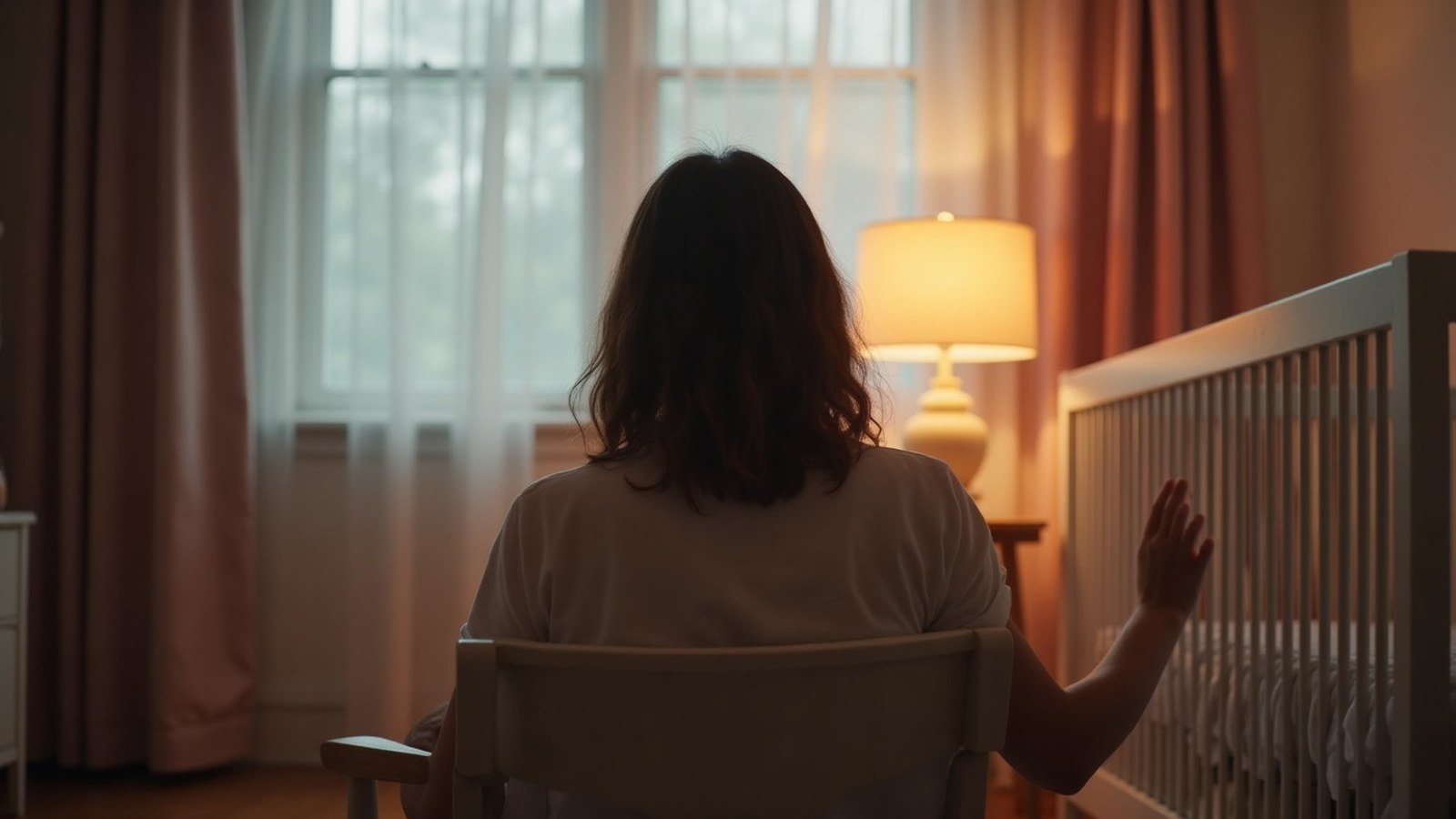
How it works: You sit beside the crib and offer calm verbal and physical reassurance, patting or shushing as needed, while your baby falls asleep on their own. You hold each chair position for about three nights, then shuffle the chair progressively away from the crib toward the door, on a set schedule, over roughly two weeks. The structure is the point. You always know exactly where the chair goes next and when, which removes a lot of the in-the-moment guesswork that makes other methods feel wobbly.
Who it suits: Parents who want the gentleness of camping out but with a clear, predictable framework rather than a vibe. It works well for slightly older babies and toddlers, and for families who feel calmer with a defined timeline they can see themselves finishing.
Sarah's honest take: I am a planner by nature, so the defined stages of the Shuffle spoke to me in a way the looser Chair Method did not. Having permission to stay close while still making real progress took the edge off my guilt. The honest downside is the same as any fading method. It is slow, and the middle-of-the-night wakings can stall the chart, because doing the full shuffle at 3 a.m. while half-conscious is genuinely hard. If you can hold the line on the routine, though, the steady arc of it is lovely to watch.
5. Gradual check-ins, sometimes called Ferber or graduated extinction
I want to talk about this one carefully and without judgement, because it carries a reputation that scares a lot of parents off before they understand what it actually involves. Graduated extinction, popularized by Dr. Richard Ferber, is not the same as shutting the door and never returning. It is a method of timed check-ins, and for many families it is faster than the fading methods while still keeping you firmly in the picture.
How it works: You complete your bedtime routine, put your baby down awake, and leave the room. If they cry, you wait a short, predetermined interval, then go in to briefly reassure them with a calm voice and a gentle touch, without picking them up. Then you leave again, and lengthen the interval a little before the next check. Maybe three minutes, then five, then ten. The intervals stretch over the evening and across the following nights. The crucial part is that you keep returning, so your baby is never truly alone for long.
Who it suits: Babies around six months and older, and parents who feel that a faster, more defined process is actually kinder than dragging things out for weeks. Some babies genuinely settle better with less hands-on involvement, because a parent who keeps appearing and patting can prolong the protest. For those families, gradual check-ins can be the most humane path, even though it does not look that way from the outside.
Sarah's honest take: Here is where I get really honest. I judged this method hard before I ever tried it, and then with my first, at the end of my rope and barely functioning, we did a gentle version of it. There were tears, mine included, and the first night was rough. But it was over in about four nights, the crying shrank quickly, and my daughter woke up happy and rested rather than traumatized, blowing raspberries at me over the crib rail. If you choose this, you are not a bad parent. You are a tired parent making a reasonable choice for your family, and the research broadly supports that responsive timed check-ins are safe. If it does not feel right to you, do not do it, and do not let anyone shame you either way.
6. Pace-yourself and responsive settling
The last method is less a rigid technique and more a philosophy, and it is the one I lean on most these days. Responsive settling means reading your individual baby in the moment and offering the smallest amount of help they actually need, no more and no less, then gradually doing less as they show you they can.
How it works: You learn your baby's cries and rhythms and respond in tiers. A grizzle might just need a moment to settle on their own, so you pause. A building cry might need your voice from the doorway. A real, escalating cry gets a hand on the chest, then a pick-up if needed. The idea is to avoid leaping straight to the biggest intervention every time, while never ignoring genuine distress. You pace yourself, adjust nightly based on what your baby tells you, and let the help fade naturally as they grow more capable.
Who it suits: Parents who hate feeling boxed in by a formula, and babies whose needs swing from night to night. It is wonderful for anyone who wants to stay deeply attuned, and it pairs naturally with a solid bedtime routine and a predictable daytime rhythm, which is why a steady baby feeding schedule makes it so much easier to read what is hunger versus what is habit.
Sarah's honest take: This is where I landed after three kids and a lot of humbling. The trade-off is that there is no neat chart to follow and no tidy finish line, which can feel disorienting if you crave structure. But it taught me to trust myself, and it is endlessly flexible, bending around teething, travel, and the curveballs babies love to throw. If you are someone who second-guesses methods constantly, responsive settling lets you stop fighting your instincts and start working with them.
Realistic expectations: what success actually looks like
Let me gently dismantle a myth before it breaks your heart. Successful sleep training does not mean your baby sleeps twelve unbroken hours forever after, never waking again. That is a fantasy that sells a lot of books and makes a lot of normal babies look like failures. What it actually means is that your baby learns to fall asleep more independently and link sleep cycles a bit better, so the wakings become fewer, shorter, and easier to settle.
Expect the first two or three nights of any active method to be the hardest, with progress that is real but bumpy. Expect setbacks too, because they are not failures. Illness, teething, travel, and developmental leaps will all scramble things temporarily, and you may need to gently re-do a method later. That is completely normal and does not mean it never worked. Some babies respond in days, others take a few weeks, and a handful are simply wired to wake more, full stop. Measure success by trend, not by a single perfect night.
What if no method seems to work?
Sometimes you do everything right and your baby still fights sleep, and I want you to know that this happens to good, consistent parents all the time. Before you blame yourself or the method, run through the basics. Is the room dark and cool enough? Is the bedtime too late, so an overtired baby is running on stress hormones? Are the daytime naps and feeds set up to support nighttime, or quietly working against it?
Often the fix is upstream of the method entirely. An overtired baby cannot be trained to sleep until you sort the schedule first. If you have given a single approach a genuine, consistent two-week try and things are not budging at all, that is your cue to check in with your pediatrician. Occasionally reflux, a milk allergy, ear infections, or sleep apnea are the real culprits, and no sleep method on earth will outwork a medical issue. Asking for help is wisdom, not weakness.
Frequently asked questions about sleep training methods
Is sleep training harmful to my baby?
The gentle, responsive methods on this list are not harmful, and that includes graduated check-ins when done with care. The research we have, including longer-term follow-up studies, has not found lasting harm to a baby's emotional health or attachment from age-appropriate sleep training. What matters is that your baby's daytime needs are warmly met and that you respond to genuine distress. If a method ever feels deeply wrong to you, trust that and switch. There is no single right approach, and the gentlest one for your family is the one you can actually carry out with love and consistency.
How long does sleep training take to work?
It varies more than anyone likes to admit. The faster methods, like graduated check-ins, often show real improvement within three to seven nights. The gentler fading methods, like the Chair Method or the Sleep Lady Shuffle, usually take two to three weeks because they move so gradually by design. Responsive settling has no fixed endpoint at all and unfolds over time. Whatever you choose, give it a consistent two-week run before deciding it failed, since the first few nights are almost always the roughest and not a fair test of the method.
Can I sleep train while still night feeding?
Absolutely, and for younger babies you should. Sleep training and night feeds are not in competition. Plenty of babies still genuinely need one or two feeds overnight well past the point they can fall asleep independently, and dropping feeds is a separate decision you make with your pediatrician based on weight and age. You can teach your baby to settle for the wakings that are not about hunger while keeping the feeds that are. I kept a dream feed going long after my babies were otherwise sleeping well, and it served us beautifully.
What if my partner and I disagree on a method?
This is so common, and getting on the same page matters more than which page you land on. A baby gets confused when one parent rocks them all the way to sleep and the other practices drowsy-but-awake, and that inconsistency stalls progress more than any method choice ever could. Sit down before you start, talk honestly about what each of you can and cannot stomach, and pick the gentlest approach you both can commit to. Then take turns, so one of you is not carrying every hard night alone. A united, slightly imperfect plan beats two perfect plans at war.
Will sleep training fix early morning wake-ups?
Not always, and early waking is the stubbornest sleep gremlin of them all. A 5 a.m. start often has more to do with the schedule than with falling-asleep skills. Bedtime being slightly too late, the room getting light too early, or a first nap that arrives too soon can all lock in an early rise. Blackout curtains, a marginally earlier bedtime, and tweaking nap timing usually do more than any settling method here. Give changes a week or two, because the body clock is slow to shift, and stay patient with this one.
Does sleep training affect breastfeeding or my milk supply?
It can if you drop night feeds too abruptly, since overnight nursing helps maintain supply for many moms, so go gradually and watch your body's signals. But teaching your baby to settle for non-hunger wakings does not have to mean ending breastfeeding at all. You can absolutely keep nursing and sleep train at the same time. If you are also navigating pumping around all of this, the rhythm gets easier once feeds and sleep both fall into a predictable pattern, which again comes back to a steady daily routine more than any single trick.
My final take, and what to do tonight
If you take one thing from this long guide, let it be this: there is no gold star for the harshest method, and there is no shame in the gentlest. The best sleep training method is genuinely the one that fits your baby's temperament, respects your own limits, and that you can carry out with consistency and warmth. Start with a rock-solid bedtime routine, keep safe sleep sacred, and then choose the approach from this list that makes your shoulders drop instead of climb. You are allowed to change your mind, mix elements, and try again after a setback. None of that makes you a failure. It makes you a parent paying attention.
So here is what I want you to do tonight. Pick just one method, the one that felt like a relief to read about rather than a chore. Set up tomorrow's bedtime routine in advance so future-you is not improvising at 7 p.m. with a meltdown in progress. Then give it two honest weeks before you judge it. When you are ready, pair it with my newborn sleep tips for the daytime side of things, and if your little one is edging toward the spirited toddler years, my notes on handling toddler meltdowns will be waiting. You have got this, and your baby is lucky to have a parent who cares this much. Now go get some rest yourself.