Baby Feeding Schedule: A Simple Month-by-Month Guide
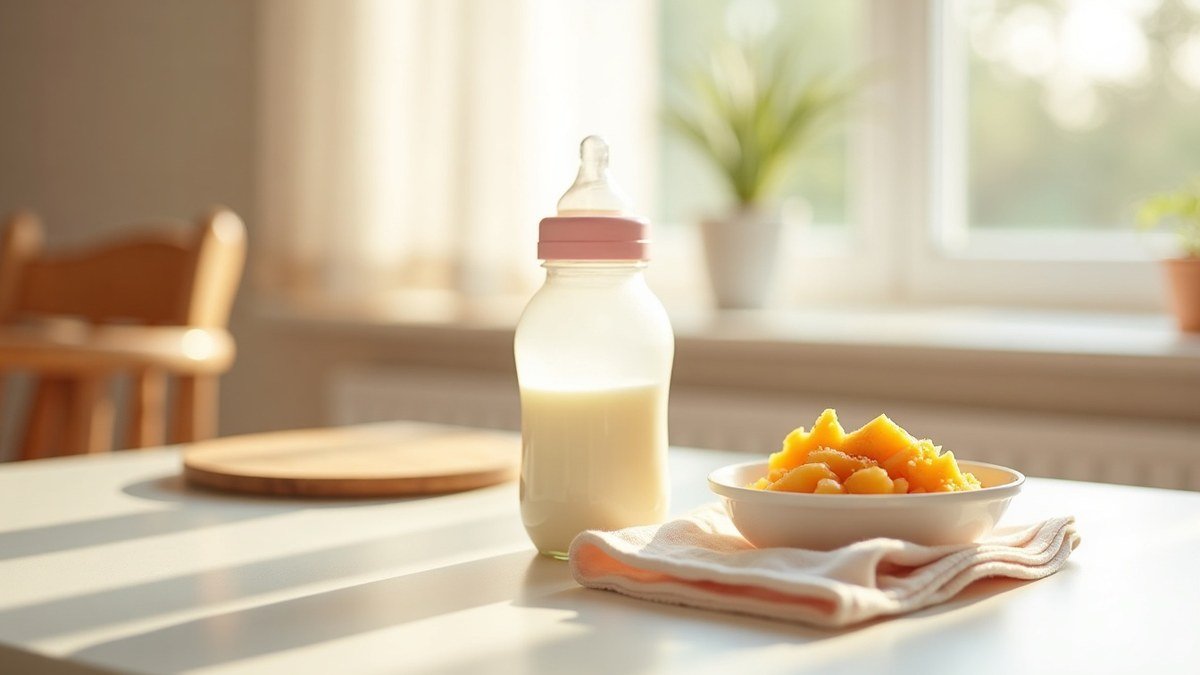
Feeding looks different at every age, and that is exactly how it is supposed to go.
When my first baby was a week old, I cried in the kitchen at 2 a.m. holding a half-finished bottle and a printed feeding chart that did not match what was happening in front of me. The chart said she should take a tidy three ounces every three hours. My actual daughter wanted a little, then more, then nothing, then everything again forty minutes later. I felt like I was failing a test nobody had handed me a study guide for. If you are standing in your own kitchen right now wondering whether you are doing this right, I want to wrap an arm around you and tell you the truth first. There is no single correct number, and a wiggly, gaining, mostly-content baby is the real scorecard.
That said, you came here for guidance, and guidance is genuinely helpful when you are tired and unsure. So in this article I will walk you through a realistic baby feeding schedule month by month, from those blurry newborn days through the first birthday and a little beyond. We will cover how often babies usually eat, roughly how much, what changes at each stage, and the cues that matter far more than the clock. I will share what I learned on the pediatric ward and what I learned through three very different babies of my own. Think of this as a map, not a rulebook.
The one rule that beats every schedule: feed the baby, not the clock
Before we get into specific months, I want to plant this idea deep, because it will save you so much worry. Babies are born knowing how to regulate their own hunger when we let them. Their appetite swings day to day, just like ours. A growth spurt can double how often they ask to eat for a few days, then it settles. A schedule is a useful backdrop, but the baby in front of you always outranks the chart on the fridge.
For the first weeks especially, you will feed on demand, meaning whenever your baby shows they are hungry. As the months pass, a gentle rhythm tends to emerge on its own, and feeds naturally space out. You do not have to force that. It arrives. When you read the age ranges below, hold them loosely. They describe the middle of a very wide and very normal bell curve.
Hunger and fullness cues to watch for
Learning your baby's signals is the real skill here, and it comes faster than you think. Early hunger cues are subtle: stirring, turning the head and opening the mouth, rooting toward your chest, bringing hands to the mouth, and little lip smacks. Crying is a late hunger cue, so if you can catch the early signs, feeds tend to go more smoothly because the baby is not already upset.
Fullness has its own language. A satisfied baby slows down, unlatches or turns away from the bottle, relaxes those tight little fists, and often drifts into that boneless milk-drunk sleep we all recognize. Please do not push the last half ounce just to finish a bottle. Letting your baby stop when full is one of the kindest, most important feeding habits you can build, and it sets the stage for healthy eating for years.
Newborn (0 to 1 month): tiny tummies, frequent feeds
The newborn stage is intense, and I will not pretend otherwise. Your baby's stomach starts out roughly the size of a cherry, then a walnut, then an apricot over the first weeks, so it simply cannot hold much at once. The answer is to feed little and often, around the clock. This is the season of feeling like all you do is feed, and that feeling is accurate. It does not last forever, I promise.
How often: Expect roughly 8 to 12 feeds in 24 hours, which works out to about every 2 to 3 hours, counting from the start of one feed to the start of the next. Yes, that includes nights. If your newborn sleeps a long stretch in the first couple of weeks, your pediatrician may ask you to wake them to feed until they are back to birth weight and gaining well.
How much (bottle): Many newborns take around 1.5 to 3 ounces per feed in the early weeks, gradually climbing toward 3 to 4 ounces by the end of the first month. A rough guide some pediatricians use is about 2.5 ounces of formula per pound of body weight over a full day, but cues still come first.
How much (breast): At the breast you usually cannot measure ounces, and you do not need to. Aim for a good latch, let baby nurse until they come off on their own, and offer both sides. Most newborns nurse 10 to 20 minutes per side, though some are fast and efficient. Counting diapers tells you more than counting minutes.
Breast vs bottle amounts: a gentle reality check
Whether you breastfeed, formula feed, pump, or do some mix of all three, your baby can absolutely thrive. I did different things with each of mine and loved them all the same. The numbers differ a little between methods, and that is fine. Bottle-fed babies often take slightly larger, more spaced feeds because formula digests a touch slower. Breastfed babies tend to feed more frequently because breast milk digests quickly and the supply-and-demand system rewards frequent nursing.
If you are pumping or planning to head back to work, it helps to get comfortable with bottles and milk storage early. My guide to the best breast pumps for 2026 walks through how to build a stash without losing your mind. The goal is a fed, growing baby and a parent who is not running on empty, in whatever combination works for your family.
How do I know my newborn is getting enough?
This is the question that keeps new parents up at night, so let me make it concrete. Watch the output. By around day five, expect roughly 6 or more wet diapers a day and several yellow, seedy stools, though stool frequency varies a lot in breastfed babies. Your baby should be back to birth weight by about two weeks and gaining steadily after that. Contentment after most feeds and steady growth on the curve are your best signs. If diapers are sparse, your baby seems lethargic, or feeding is painful, call your pediatrician promptly.
1 to 2 months: cluster feeding and the first growth spurts
Just when you start to feel a faint rhythm, your baby may suddenly want to eat constantly for a day or two. Welcome to cluster feeding and growth spurts, two of the most misunderstood parts of early feeding. They are normal, they are temporary, and they are not a sign your milk has dried up or your baby is broken.
How often: Still frequent, generally every 2 to 3 hours, landing around 7 to 9 feeds in 24 hours. Some babies begin to stretch one slightly longer sleep at night, which feels like winning the lottery.
How much (bottle): Often about 4 to 5 ounces per feed by 2 months, though appetites vary widely. How much (breast): Still nursing on demand, with feeds becoming a little more efficient as your baby gets stronger and faster at the breast.
What cluster feeding actually is
Cluster feeding is when your baby bunches several feeds close together, often in the evening, sometimes nursing every 30 to 60 minutes for a stretch. It looks alarming if you think something is wrong, but it usually means your baby is fueling up, often before a longer sleep or during a growth spurt. For breastfeeding parents, it is also how your baby tells your body to make more milk. The fix is not to fight it. The fix is snacks for you, water, a comfy spot, and a show to binge while you ride it out.
Growth spurts commonly land around 2 to 3 weeks, 6 weeks, and 3 months, though babies do not read the calendar. During one, your baby may feed more, fuss more, and sleep oddly for a couple of days, then return to normal with a bigger appetite. If feeding troubles also disrupt nights, you might find comfort in my newborn sleep tips, since feeding and sleep are deeply tangled in these early months.
Sarah's tip: Keep a "feeding station" stocked wherever you nurse or give bottles most: a big water bottle, a phone charger, burp cloths, and one-handed snacks. During a cluster-feeding evening, you will thank past you for setting it up. Hydration and a snack within arm's reach turned my hardest nights from miserable to merely long.
3 to 4 months: a real rhythm starts to appear
This is often the stage where parents exhale a little. Your baby is bigger, takes more per feed, and can usually go longer between them. A loose, baby-led schedule finally starts to feel predictable, even if it still shifts from day to day. You are not imagining the progress. It is real.
How often: Roughly every 3 to 4 hours, landing around 6 to 8 feeds in 24 hours. Many babies also begin to consolidate nighttime sleep, though plenty still wake to eat, which is completely normal at this age.
How much (bottle): Often about 4 to 6 ounces per feed, with a daily total that commonly lands somewhere around 24 to 32 ounces. How much (breast): Efficient nursing sessions, frequently shorter than the marathon newborn feeds, because your baby is now a pro at the breast.
The four-month appetite wobble
Around 4 months, many parents notice feeding gets distractible and sleep gets bumpy. This is the famous four-month phase, where your baby becomes fascinated by the whole world and keeps popping off the bottle or breast to look around. It is developmental, not a feeding problem. Feeding in a calm, dim, low-stimulation room can help a distractible baby focus. Resist the urge to start solids early just because feeds feel chaotic. The readiness signs we will cover next matter more than the wobble.
5 to 6 months: watching for signs of readiness for solids
Here comes one of the most exciting milestones, and one of the most over-rushed. Milk, whether breast milk or formula, remains your baby's main nutrition through the entire first year. Solids in this window are about exploring, learning, and complementing milk, not replacing it. Most major health groups, including the CDC, suggest waiting until around 6 months to start solids, and waiting for genuine readiness rather than a calendar date.
How often (milk): Still your baby's main meal, roughly every 4 hours or so, around 5 to 6 milk feeds a day. How much (bottle): Often about 6 to 8 ounces per feed. Solids start as tiny tastes once a day and slowly build, but milk stays in the lead.
The readiness signs that actually matter
Forget age alone and look for these three together. First, your baby can sit up with little or no support and hold their head steady, which they need to swallow safely. Second, the tongue-thrust reflex that pushes food out has faded, so food can stay in the mouth. Third, your baby shows real interest in food, watching you eat, reaching, and opening up. When those line up, usually around 6 months, you are ready to begin.
When you do start, go slow and gentle. Begin with one tiny taste a day, offered after a milk feed so your baby is not frantic with hunger. I wrote a full step-by-step in my guide on how to introduce solids, and if you love the idea of skipping purees and going straight to soft finger foods, my baby-led weaning guide covers that path too. Both are valid. Pick the one that suits your nerves and your baby.

7 to 9 months: solids and milk find their balance
Now feeding gets genuinely fun and genuinely messy. Your baby is moving from a single daily taste toward two and then three small meals a day, alongside steady milk feeds. This is a season of textures, faces, and food on the ceiling. Lean into the mess. It is how they learn.
How often (milk): Generally 4 to 5 milk feeds a day, roughly every 4 hours, still the nutritional backbone. How often (solids): Building from 1 to 2 meals up toward 2 to 3 meals by 9 months. How much (bottle): Often about 6 to 8 ounces per feed, with daily milk commonly around 24 to 30 ounces as solids increase.
What is new on the plate
Variety is the whole game now. Offer soft, mashed, or appropriately sized finger foods across all the food groups: iron-rich foods like meat, beans, lentils, and fortified cereal, plus soft fruits, cooked vegetables, full-fat dairy like yogurt and cheese, and grains. Iron matters a lot at this stage because a baby's natural iron stores begin to run low, so prioritize iron-rich first foods. Introduce common allergens like peanut and egg early and one at a time, unless your pediatrician advises otherwise, as current guidance favors earlier introduction.
Offer milk first, then solids, in these early months so your baby still gets the bulk of their calories from milk. As they eat more, the order naturally flips. Always supervise closely, seat your baby upright in a high chair, and steer clear of choking hazards like whole grapes, nuts, popcorn, and chunks of raw apple. Cut round foods lengthwise and keep textures soft.
10 to 12 months: three meals, snacks, and more independence
By now your baby is becoming a little eater with opinions, and honestly, it is a delight. Three small meals a day plus a snack or two is the typical pattern, with milk still important but no longer the entire show. Self-feeding takes off as the pincer grasp develops, so finger foods become a daily joy and a daily cleanup.
How often (milk): Usually 3 to 4 milk feeds a day. How much (bottle): Often about 7 to 8 ounces per feed, with daily milk commonly around 16 to 24 ounces as solids carry more of the load. How often (solids): Three meals plus one or two snacks, with growing variety and texture.
Letting them lead
This is a wonderful time to hand over more control. Load up safe finger foods on the tray and let your baby make a glorious mess feeding themselves. They will eat less neatly and probably wear half of it, but they are building coordination, confidence, and a healthy relationship with food. Offer water in an open or straw cup with meals to practice for the year ahead. Keep portions baby-sized and remember that appetites still swing wildly from one day to the next.
12 months and beyond: table foods and whole milk
Happy first birthday to your baby and to you, because you made it through the most demanding feeding year there is. Around 12 months, feeding shifts in two big ways. Your toddler can move toward eating the same meals as the rest of the family, in safe forms, and many families transition from formula or extended breastfeeding toward whole cow's milk. If you are breastfeeding and you both want to continue, that is wonderful too. There is no rush to stop.
How often: Three meals plus two snacks a day, the classic toddler pattern. Milk: Whole milk often comes in around 16 to 24 ounces a day, kept moderate so it does not crowd out food and iron. Too much milk can fill a toddler up and reduce appetite for varied meals, so most pediatricians suggest capping it.
Easing into family meals
The transition to table foods is gentler when you do it gradually. Keep offering soft, small, safe pieces and continue avoiding choking hazards well into the toddler years. Expect picky days, food strikes, and the famous toddler tendency to love a food on Monday and reject it on Tuesday. This is normal development, not a feeding failure. If mealtime power struggles ramp up, my notes on staying calm through toddler tantrums apply at the table as much as anywhere. Offer, model, and let them decide how much. Your job is the what and when. Theirs is the how much.
A quick reference: typical feeds and amounts by age
Here is the whole journey in one place. Remember, these are typical middle-of-the-range numbers to orient you, not targets to hit exactly. Your baby's cues and your pediatrician's guidance always come first.
| Age | Feeds per day | Typical amount | What's new |
|---|---|---|---|
| Newborn (0 to 1 mo) | 8 to 12 milk feeds | 1.5 to 4 oz per bottle, or nurse on demand | Frequent feeds, day and night, tiny tummy |
| 1 to 2 months | 7 to 9 milk feeds | 4 to 5 oz per bottle | Cluster feeding and first growth spurts |
| 3 to 4 months | 6 to 8 milk feeds | 4 to 6 oz per bottle | A real rhythm appears, longer night sleep |
| 5 to 6 months | 5 to 6 milk feeds | 6 to 8 oz per bottle | Watch for solids readiness, first tastes |
| 7 to 9 months | 4 to 5 milk feeds plus 2 to 3 meals | 6 to 8 oz milk, growing solids | Iron-rich foods, allergens, finger foods |
| 10 to 12 months | 3 to 4 milk feeds plus 3 meals and snacks | 7 to 8 oz milk, more solids | Self-feeding, pincer grasp, cup practice |
| 12 months and up | 3 meals plus 2 snacks | 16 to 24 oz whole milk a day | Table foods, whole milk, toddler eating |
These ranges are general guidance only. Breastfed babies often feed more frequently and you usually will not measure ounces. Always follow your baby's cues and your pediatrician's advice.
How much should I actually trust the numbers?
I want to circle back to where we started, because it matters more than any row in that table. The numbers above are a compass, not a destination. Two healthy babies the same age and weight can have noticeably different appetites and both be perfectly fine. A baby who takes a little less at one feed will often take more at the next. Over a whole day and a whole week, it balances out in ways a single feed never shows.
For trustworthy, regularly updated guidance, I lean on official sources alongside my own experience. The CDC keeps a clear, parent-friendly hub on infant and toddler nutrition that I recommend bookmarking, and the NHS offers a lovely Start for Life feeding guide if you prefer their style. Use them to inform, then trust the baby in front of you and the pediatrician who knows your child.
Frequently asked questions about baby feeding schedules
Should I wake my baby to feed?
In the newborn weeks, often yes. Until your baby is back to birth weight and gaining steadily, most pediatricians recommend not letting a newborn go longer than about 4 hours without a feed, even overnight, which sometimes means a gentle wake-up. Once your baby is gaining well and your doctor gives the okay, you can usually let them sleep and feed when they wake. Always check with your own pediatrician, especially if your baby was premature, small, or has any weight-gain concerns.
How do I tell hunger from a growth spurt or just fussiness?
Look at the pattern and the cues. True hunger shows up as rooting, hands to mouth, and lip smacking, and it eases once your baby eats. A growth spurt looks like several days of unusually frequent, hungry feeds that then settle down on their own. Fussiness that does not calm with feeding may be gas, tiredness, overstimulation, or just an evening witching hour. If your baby feeds well and seems satisfied afterward, hunger was likely the issue. If they keep fussing despite a full belly, look at sleep, comfort, or simply needing to be held.
Is my baby eating too much or too little?
The clearest signals are growth and diapers, not the size of any single feed. A baby who is gaining well along their own curve, producing plenty of wet diapers, and seeming content after most feeds is almost always eating the right amount for them. Try not to push extra ounces to finish a bottle or compare your baby to someone else's. If you genuinely worry about over or underfeeding, bring it to your pediatrician, who can check growth against the curve and reassure you with real data.
When should I drop a night feed?
There is no fixed deadline, and it varies enormously. Many babies naturally stretch their longest sleep and drop night feeds somewhere in the 4 to 9 month window, often once solids are well established and weight gain is solid. Others, especially breastfed babies, keep a night feed longer, and that is fine. Let it happen gradually rather than forcing it, and never night wean a young baby without your pediatrician's blessing. Feeding and sleep are linked, so my newborn sleep tips can help you ease the two along together.
Do breastfed and formula-fed babies follow different schedules?
A little, yes. Breast milk digests faster, so breastfed babies often feed more frequently, especially early on, and you typically feed on demand rather than counting ounces. Formula digests slightly slower, so bottle-fed babies sometimes take larger, more spaced feeds. Both patterns are healthy. If you combine breast and bottle, you will land somewhere in between, and that mix is completely fine. Whatever you do, your baby's cues remain the best guide to how often and how much.
You are doing better than you think
If you take one thing from this guide, let it be this: a feeding schedule is a helpful frame, but your baby is the expert on their own hunger, and you are becoming the expert on your baby. The numbers and milestones here are there to orient you on the hard nights, not to grade you. Some days will follow the chart beautifully and some days will throw the whole thing out the window, and both kinds of days are raising a healthy, well-fed child.
So take a deep breath and trust yourself. Watch for those hunger and fullness cues, offer milk and then food with love and patience, and bring your real questions to your pediatrician. If this guide helped, save it for the next bleary 2 a.m. moment, browse the related reads below for your baby's next stage, and send me a note to tell me how feeding is going in your house. I read every message, and I am cheering you on.