Baby-Led Weaning: The Complete Beginner's Guide
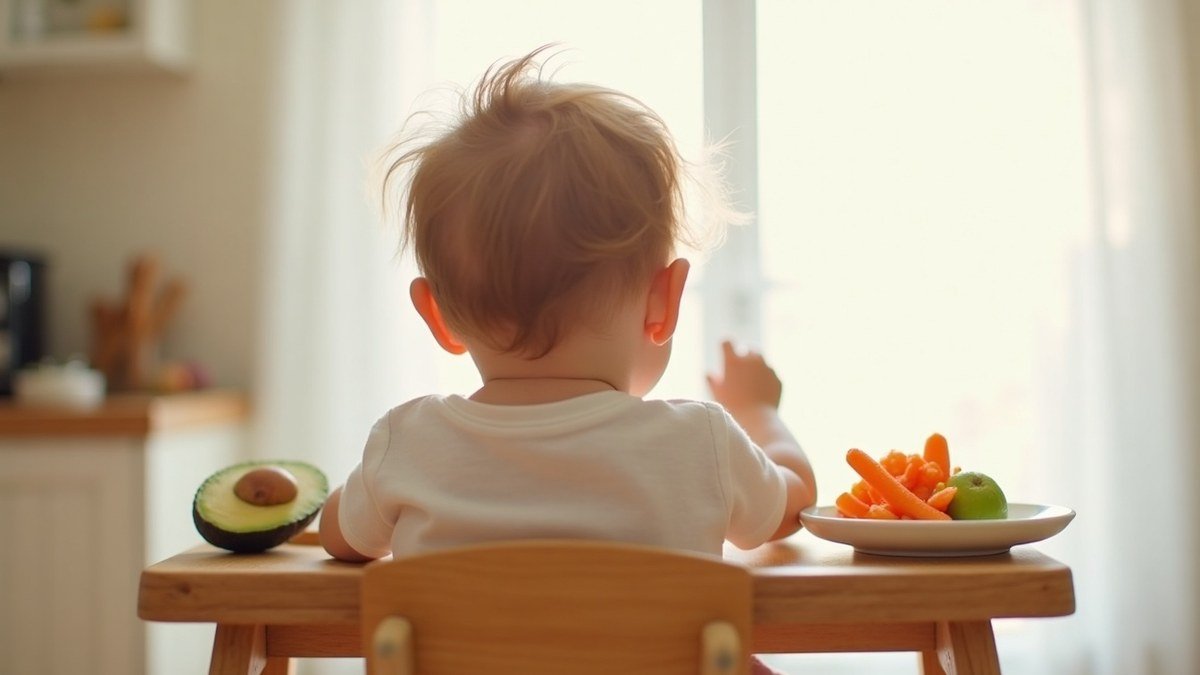
Those first messy meals look like chaos, but your baby is learning a real skill.
When my first baby grabbed a strip of roasted sweet potato off my plate and shoved the whole thing in her fist, I nearly leapt across the kitchen. My nurse-assistant brain was screaming about choking while my mom brain was thrilled she wanted real food. That tug-of-war is exactly where most parents land when they first hear about baby-led weaning. It sounds either wonderfully freeing or genuinely terrifying, and usually both at once. I have now done some version of it with all three of my kids, and I promise the fear softens once you understand what is actually happening at that high chair.
This baby led weaning guide is the calm, honest walkthrough I wish someone had handed me before that first sweet potato. We will start with safety, because that matters more than anything else, including learning the difference between gagging and choking and why infant first aid is non-negotiable before you begin. Then we will cover readiness signs, how to cut and shape food by skill stage, the best and worst first foods, setting up the chair, surviving the mess, blending in spoon-feeding, allergens, and what realistic progress actually looks like. Take a breath. You can absolutely do this.
Safety first: learn choking response before your baby's first bite
I am leading with this because it is the single most important thing in the entire guide. Before you put any solid food in front of your baby, whether you choose purees or finger foods, you and every regular caregiver should know how to respond if a baby is choking. Take an infant CPR and choking-response class, watch a reputable refresher video, and keep the steps somewhere you can picture them under stress. This is true for all feeding styles, not just baby-led weaning. I will never tell you BLW is dangerous, but I will always tell you to be prepared.
Why does this come first? Because confidence at the table comes from competence, not luck. When I knew exactly what I would do if something went wrong, I stopped hovering with my heart in my throat and actually let my baby learn. A panicked parent who snatches food away at every cough teaches a baby that eating is scary. A prepared parent who understands the process can sit back, stay close, and let those important skills develop. Preparation is what makes calm possible.
Never leave a baby alone with food, ever
This rule has no exceptions. Your baby should always be seated upright, strapped into their chair, and within arm's reach with your full attention while eating. No eating in the car seat, no eating while crawling around, no propping a snack and stepping away to answer the door. Most serious incidents involve a baby who was moving, reclined, or unsupervised. Stay present, stay close, and treat every meal as a watch-and-be-ready job. It is genuinely the most powerful safety habit you have.
What baby-led weaning is and how it differs from purees
Baby-led weaning, often shortened to BLW, simply means letting your baby feed themselves soft, appropriately prepared finger foods from the very start of solids, instead of being spoon-fed smooth purees by an adult. Your baby picks up the food, brings it to their own mouth, and decides how much to eat. You are the calm provider of safe options, and your little one is the driver. It tends to follow the family's meals rather than a separate jar-and-spoon routine.
The traditional approach, by contrast, starts with thin purees fed by spoon, then gradually thickens and adds lumps and textures over weeks and months. Neither path is wrong, and plenty of wonderful, healthy eaters come from each. The real differences are who controls the pace, when textured food arrives, and how much the baby joins the family table early on. Many families, including mine, end up doing a relaxed blend of both, which I cover later in this guide.
Why some parents love the baby-led approach
The appeal is real. Babies learn to manage texture, chewing, and self-regulation early, often becoming more adventurous eaters. There is no separate baby meal to prepare when your child can gnaw a soft floret of your broccoli. It builds fine-motor skills and lets your baby tune into their own fullness, which may support a healthier relationship with food. And honestly, watching a tiny human concentrate fiercely on a piece of banana is one of the great free entertainments of early parenthood.
The honest tradeoffs to expect
It is messier, full stop. There is more cleanup, more dropped food, and more visible waste in the early weeks, since a lot ends up on the floor rather than swallowed. You also cannot easily measure how much your baby ate, which unsettles some parents. And gagging is more frequent at first, which is normal but nerve-wracking until you understand it. None of these are dealbreakers, but going in with clear eyes saves you a lot of second-guessing on a hard day.
Readiness signs and timing: aiming for around six months
Age is a guideline, not a green light on its own. Most babies are ready to start solids around six months, and major health bodies recommend waiting until then rather than starting earlier. With baby-led weaning specifically, that six-month mark matters even more, because self-feeding requires sitting and coordination that simply is not there at four months. The NHS has a clear, reassuring overview of weaning timing in its Start for Life weaning guidance that I often share with friends who feel rushed.
Beyond age, look for three classic readiness signs together. First, your baby can sit up well with little or no support and hold their head steady. Second, the tongue-thrust reflex that pushes food back out has faded, so food can actually move backward to be swallowed. Third, your baby shows real interest in your food, reaching, leaning, and watching your fork like a hawk. When all three line up, usually around six months, you have a much safer and happier starting point than a calendar date alone.
Why earlier is not better
I know the pressure to start early is strong, especially when a relative insists a little cereal will help baby sleep. The research does not support that, and an early start can stress a digestive system that is not ready. For baby-led weaning, an under-six-month baby usually cannot sit steadily enough to feed themselves safely anyway. Waiting until your baby is genuinely ready is not falling behind. It is setting the whole experience up to go better for both of you.
Gagging versus choking: the difference every parent must know
This is the section I most wish someone had drilled into me before that first sweet potato, so please read it twice. Gagging and choking are not the same thing, and confusing them leads to exactly the wrong reactions. Gagging is loud, dramatic, and protective. Choking is silent, and it is the true emergency. Your job is to learn to tell them apart so you can stay calm during the normal noisy gagging and act fast during the rare quiet choking.
Gagging is your baby's built-in safety system doing its job. A baby's gag reflex sits much further forward on the tongue than ours, which means food triggers it easily and often early in weaning. When your baby gags, you will see them open wide, push the tongue forward, cough, sputter, maybe go red, and frequently bring the food back toward the front. It looks alarming, but it is the body protecting the airway. The best thing you can do is stay calm, keep your hands back, and let your baby work it out. Snatching at their mouth can actually push food backward.
Sarah's tip: Practice your poker face before you ever sit down to that first meal. Babies read panic instantly. If you gasp and lunge every time your baby gags, they learn that eating is frightening. I used to quietly hum to myself during gagging episodes just to keep my own face neutral while I stayed ready. Calm caregiver, calmer learner.
What choking actually looks like
Choking is the opposite of gagging in almost every way, and the contrast is what helps you recognize it. A choking baby is usually quiet or silent, because the airway is blocked and no air is moving. You may see no sound, a weak or absent cough, panic in the eyes, a high-pitched squeak or nothing at all, and possibly a color change to blue around the lips. This is when you act immediately with the infant choking response you learned in your class. Gagging gets your patience. Choking gets your trained, immediate action.
How to lower the odds before they happen
Prevention does most of the heavy lifting. Always seat your baby fully upright, never reclined. Offer one piece at a time so they cannot stuff a fistful. Avoid the high-risk foods I list below, like whole nuts, grapes left round, and hard raw chunks. Cut and shape everything to the safe sizes for your baby's stage. And never let anyone, including an excited sibling, feed your baby unsupervised. These small habits, done every single meal, are what keep gagging in the normal lane and choking rare.
How to prep safe finger-food shapes and sizes by stage
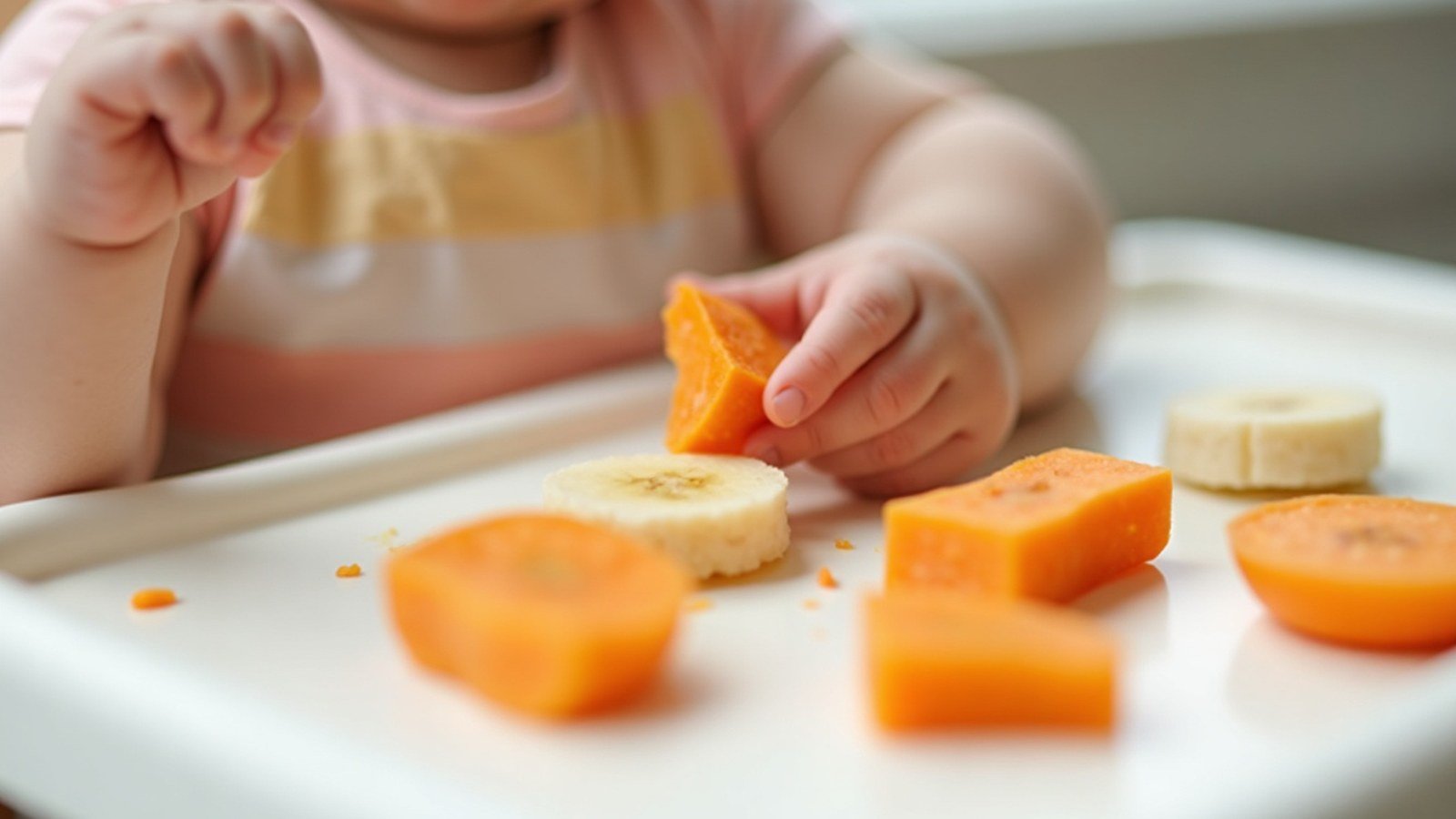
The size and shape of the food is where baby-led weaning safety really lives, and it changes as your baby's skills grow. Early on, before the pincer grasp develops, babies hold food in their whole fist and gnaw what sticks out the top. So your first finger foods need to be long enough to grip with a piece poking out, and soft enough to squish between your finger and thumb. A good rule for the early weeks is roughly the size and shape of your own adult finger.
As your baby approaches eight to ten months, the pincer grasp arrives, that neat thumb-and-forefinger pinch, and they can pick up smaller pieces. Now you can move to bite-sized soft pieces, still squishable, about the size of their fingertip. The squish test never retires though. Whatever the stage, if you cannot easily mash it between two fingers, it is not soft enough yet. Here is a simple reference table to keep on your fridge while you find your footing.
| Skill stage | Approx age | Shape & size | Good first foods |
|---|---|---|---|
| Palmar grasp (early) | ~6 months | Long finger-length strips with a grippable end | Roasted sweet potato wedges, steamed broccoli florets, avocado spears, toast fingers |
| Raking grasp | ~7-8 months | Thicker sticks and soft halves, easy to scoop | Soft cooked carrot batons, ripe banana halves, well-cooked pasta tubes, omelet strips |
| Pincer grasp (emerging) | ~8-10 months | Pea-sized to fingertip-sized soft pieces | Soft berries quartered, beans, flaked fish, small cooked pasta, soft cheese cubes |
| Refined pincer | ~10-12 months | Smaller bites, more variety, family textures | Chopped soft fruit, mini meatballs, cooked grains, soft cooked veg medleys |
Ages are approximate. Always follow your own baby's readiness and run the two-finger squish test on every food.
Shaping foods that tend to be slippery or round
Some foods need a little engineering. Round foods are a particular hazard because they fit a baby's airway perfectly. Grapes, cherry tomatoes, and large blueberries should always be quartered lengthwise, never served whole. Slippery foods like avocado or banana can be rolled in a little baby cereal or ground oats to give tiny fingers something to grip. A wedge of mango held by the slippery part with the textured part exposed works beautifully. Small tweaks like these turn frustrating or risky foods into easy wins.
Best and worst first foods for baby-led weaning
Let me make this practical. The best early foods are soft, iron-rich, and easy to shape, because iron stores from birth start running low around six months and breast milk alone no longer covers the need. Iron-rich winners include well-cooked meat in soft strips or mini meatballs, flaked fish with bones removed, mashed beans and lentils shaped into patties, and iron-fortified cereals spread on a loaded spoon. Pair iron foods with vitamin C foods like soft fruit to help absorption. That single tip does a lot of quiet good.
Beyond iron, lean on soft vegetables and fruits your baby can grip. Steamed broccoli, roasted sweet potato, soft cooked carrot, ripe avocado, banana, and well-cooked pasta are gentle, forgiving first foods. Offer a rainbow over the weeks. The early goal is exploration and skill-building, not hitting nutrition targets at every meal, since milk is still your baby's main nutrition through the first year. Variety now plants the seeds for an adventurous eater later, which your future self will thank you for at countless dinners.
Foods to avoid or handle with real care
Some foods are genuinely off the table in the first year. Never give honey before twelve months, because of the risk of infant botulism, and that includes honey baked into foods. Skip whole nuts and large seeds entirely, which are choking hazards, though smooth nut butters thinly spread are fine and helpful for allergen introduction. Avoid hard, round, or sticky foods such as whole grapes, raw apple or carrot chunks, popcorn, hot dog coins, and globs of stiff peanut butter. Also go easy on added salt and added sugar, since little kidneys and taste buds do not need them.
One more honest note on cow's milk. Whole milk as a main drink should wait until twelve months, though a little used in cooking or with cereal is fine before then. The same goes for choking-risk textures hiding in everyday foods, like stringy melted cheese or a stiff scoop of nut butter straight from the jar. When in doubt, soften it, thin it, or reshape it. If you are also juggling spoon foods and want a structure, my month-by-month feeding schedule lays out how milk and solids fit together across the first year.
Setting up the high chair and managing the mess
A good setup quietly prevents half your problems. Your baby needs a sturdy high chair that supports an upright, well-braced position, ideally with a footrest, because feet that have something to push against help babies feel stable and chew more effectively. Dangling legs make for a wobbly, distracted eater. Strap your baby in every time, bring the tray close, and make sure they are sitting at roughly a ninety-degree angle, never reclined. If you are still choosing a chair, my roundup of the safest, easiest-to-clean high chairs walks through what actually matters.
Now, the mess, because it is coming and there is no avoiding it. Accept early that food on the floor is not failure, it is the cost of learning. A large washable splat mat under the chair saves your floors and your sanity. A long-sleeved coverall bib turns a daily outfit change into a quick wipe-down. I learned to feed my babies in just a diaper in warm weather and hose everyone off after, which sounds extreme until you have scraped dried oatmeal out of a onesie collar for the fourth time.
Small tricks that cut the chaos
A few habits made meals far less daunting in my house. I offered tiny portions and added more as needed, so a swept arm did not launch an entire meal across the room. I kept a damp cloth within reach for the inevitable face and hand cleanup, which babies often hate, so I made it quick and gentle. And I started letting my babies hold a small spoon early, even uselessly, because the practice paid off later. Lower your standards for tidiness now and your stress drops with them.
Combining baby-led weaning with spoon-feeding
Here is permission you may need: you do not have to pick a team. The purist version of baby-led weaning skips spoons entirely, but real family life rarely fits in a tidy box. With my third, I offered finger foods at most meals and still spooned yogurt, oatmeal, or a thick soup when it made sense. This relaxed blend, sometimes called responsive or combination feeding, gives you the skill-building of self-feeding plus the practicality of spoon foods for messier textures. Nobody hands out purity medals at the pediatrician's office.
The key is to keep it baby-led in spirit even when a spoon is involved. Let your baby grab the spoon, turn it around, and explore. Pre-load a spoon and hand it over rather than flying it into their mouth. Watch their cues and stop when they turn away or close their lips, instead of pushing one more bite. If you want a gentler on-ramp that starts with some purees, my step-by-step guide on how to introduce solids pairs nicely with everything here and takes the pressure off choosing one rigid method.
Introducing allergens safely and confidently
The old advice to delay allergens has flipped, and this is genuinely good news. Current guidance encourages introducing common allergenic foods early, around when you start solids, because early, regular exposure may actually reduce the risk of developing some food allergies. The main allergens to work in include peanut, egg, dairy, soy, wheat, tree nuts, fish, shellfish, and sesame. Smooth peanut butter thinly spread on a finger of toast, or a strip of well-cooked omelet, are easy baby-led ways to offer two of the big ones.
Go one new allergen at a time, offered earlier in the day rather than at bedtime, so you can watch for any reaction over the next couple of hours. Start with a small taste, and if all is well, build up and keep that food in regular rotation, since consistency seems to matter. If your baby has severe eczema or a known food allergy, talk to your pediatrician or an allergist before you begin, because they may want a specific plan. The trusted overview from the AAP on introducing allergenic foods at HealthyChildren.org is a reassuring read.
What a reaction can look like
Most babies sail through allergen introduction with no drama at all, so try not to start from fear. Still, know the signs. Mild reactions can include hives, redness around the mouth, or some vomiting. More serious signs include swelling of the lips or face, widespread hives, trouble breathing, persistent coughing, or sudden lethargy. If you ever see breathing difficulty or severe swelling, treat it as an emergency and call for help immediately. Knowing what to watch for, then introducing calmly and one at a time, is exactly the right balance.
Realistic expectations: what progress actually looks like
If I could tape one truth to every high chair, it would be this: in the beginning, your baby is playing with food more than eating it, and that is completely fine. For the first weeks and even months, milk remains your baby's main source of nutrition. Those early meals are practice sessions for chewing, gripping, and tasting, not calorie-counting exercises. So when most of the avocado ends up smeared in eyebrows rather than swallowed, your baby is still succeeding. Learning to eat is a slow, beautifully inefficient process.
Expect uneven days, too. Babies eat enthusiastically one day and bat everything away the next, often around teething, illness, or a developmental leap. A food rejected ten times can become a favorite on the eleventh try, so keep offering without pressure. Some of this back-and-forth even rhymes with the testing you will meet later in toddler meltdowns, and the same calm, low-drama response works wonders at both stages. Trust the long game. You are raising an eater over years, not over a single messy Tuesday.
Frequently asked questions about baby-led weaning
Is baby-led weaning safe, or does it cause more choking?
When you follow the basics, the research is reassuring: studies have not found that baby-led weaning leads to more choking than traditional spoon-feeding, provided foods are prepared safely and high-risk foods are avoided. The non-negotiables are an upright seated baby, soft squishable food in safe shapes, no whole nuts or round foods, constant supervision, and a caregiver who knows infant choking response. Do those things and you have stacked the odds firmly in your favor. The preparation is what makes it safe, far more than the method itself.
How do I know if my baby is actually getting enough to eat?
In the first year, your baby's main nutrition still comes from breast milk or formula, so the solids are a bonus while skills develop. That takes the pressure off counting bites. Watch the bigger picture instead: steady growth at checkups, plenty of wet and dirty diapers, and a generally content, energetic baby. Your pediatrician tracks growth for a reason, so lean on those visits. If your little one is thriving on the charts and happily nursing or taking bottles, the food smeared everywhere is doing its real job, which is learning.
Can I do baby-led weaning and still use purees?
Absolutely, and most families I know do exactly that. There is no rule that you must choose one pure path. You can offer finger foods at some meals and spoon-feed yogurt, oatmeal, or thick soups at others. Keeping it responsive, letting your baby grab the spoon, watching their fullness cues, and never forcing bites, preserves the spirit of baby-led feeding even with a spoon in the mix. Combination feeding is flexible, practical, and entirely valid. Do what fits your baby and your real, busy kitchen.
What foods should I never give in the first year?
Keep a short mental list. No honey before twelve months because of botulism risk, including honey baked into foods. No whole nuts, popcorn, or large hard chunks of raw fruit and vegetables, which are choking hazards. Always quarter round foods like grapes and cherry tomatoes. Skip whole cow's milk as a main drink until twelve months, though a little in cooking is fine. Go light on added salt and sugar. Everything else, offered soft and in safe shapes, is generally fair game and worth exploring.
My baby gags a lot. Should I stop baby-led weaning?
Frequent gagging in the early weeks is normal and expected, not a sign to quit. A baby's gag reflex sits far forward, so it triggers easily and is actually protecting the airway while your baby learns to move food around. Stay calm, keep your hands back, and let them work through it. If you find gagging is happening because pieces are too small and slipping back, ironically, larger finger-length pieces they can gnaw are often safer at first. If you ever feel genuinely unsure, check in with your pediatrician for peace of mind.
My final take
Baby-led weaning is not a test you can pass or fail, and it is not as scary as that first grab for the sweet potato makes it feel. It is simply you offering safe, soft, real food and trusting your baby to learn one messy meal at a time. Lead with safety: learn your infant choking response, never feed unsupervised, serve squishable foods in the right shapes, and skip the genuine hazards. Do that, and you can relax into the rest, mess and all. Your calm presence is the most important ingredient at that high chair.
So spread the splat mat, strap your baby in, and let them dig in. Some of my warmest early memories are of a tiny face lit up with the wonder of squishing a strawberry for the very first time. You are giving your child a lifelong, joyful relationship with food, and you are doing it with so much love and care, or you would not have read all the way here. Browse the related guides below for the next steps, and send me a note to tell me how that first meal goes. I read every message and I am cheering you on.